 Skip to content
Guide to Buying a Hardfacing Machine: The Industrial Buyer’s Roadmap
1. Automation vs. Manual: The Throughput Factor
Before looking at brands, decide on the level of intervention.
-
Manual/Semi-Automatic: Best for irregular shapes like crusher teeth or small pump housings.
-
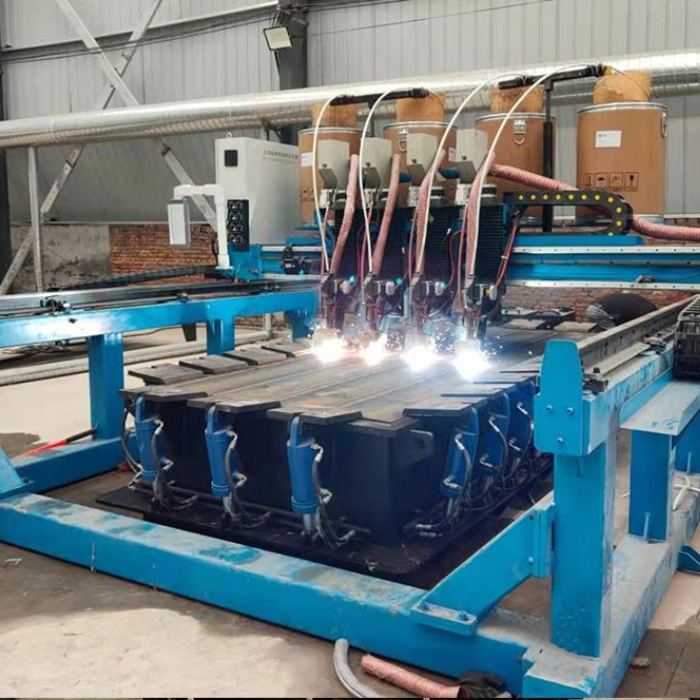
Fully Automated (Gantry/CNC): Essential for manufacturing CCO plates. These systems provide the uniform “bead” pattern required for consistent 60+ HRC hardness across a large surface.
2. Duty Cycle and Power Source
Hardfacing involves long, continuous arcs that generate immense heat.
-
Don’t settle for less than a 100% duty cycle at the required amperage.
-
Look for Inverter-based power sources; they offer better arc stability for complex chromium-carbide wires compared to older transformer models.
3. Open-Arc vs. Submerged-Arc Compatibility
-
Open-Arc: Faster setup, no flux handling required. Ideal for onsite repairs.
-
Submerged-Arc (SAW): Offers the highest deposition rates and “cleanest” finish with minimal smoke. If you are producing plates for the cement or power industry, SAW is often the gold standard for quality.
Technical Comparison: What to Look For
| Feature | Entry-Level / Repair Shop | Industrial Production (CCO) |
| Amperage Range | 250 – 400A | 500 – 1000A+ |
| Wire Feed System | Single Drive | 4-Roll Heavy Duty (for knurled wires) |
| Cooling | Air-Cooled | Integrated Water-Cooling |
| Control System | Analog Knobs | PLC / CNC Touchscreen |
| Best For | Buckets, Hammers, Small Parts | Large Wear Plates, VRM Rollers |
4. Wire Feed Reliability (The “Hidden” Cost)
Hardfacing wires are often tubular and filled with abrasive alloys. They are “stiffer” and more brittle than standard MIG wire.
Pro Tip: Ensure the machine features heavy-duty, four-roll drive systems. A cheap wire feeder will slip, leading to “porosity” in your overlay, which causes the plate to fail prematurely.
5. Oscillating Capability
For wide-bead hardfacing, the welding torch needs to oscillate (move side-to-side). Check if the machine’s software allows you to adjust:
-
Oscillation width (typically 10mm to 50mm).
-
Dwell time (how long it pauses at the edges to ensure a flat tie-in).
Key Takeaways for SEO & ROI
-
Search Intent: Most buyers search for “automatic cladding machine” or “hardfacing overlay system.”
-
ROI Tip: A machine that costs 20% more but has a 100% duty cycle will pay for itself in three months by eliminating cooling downtime.
